

Product Description
Learn the methods of auto-suggestion from one of the pioneers, Emile' Coue'.
Now Available with MP3 Audio Book
Contents
PREFACE ………………………………………………………………………………………….. 6
CHAPTER 1 – WHAT IS MINDFULNESS? ………………………………………….. 7
CHAPTER 2 – AUTO-SUGGESTION …………………………………………………. 17
CHAPTER 3 -THE REALITY OF AUTO-SUGGESTION …………………….. 32
CHAPTER 4 – THE ROLE OF THE IMAGINATION……………………………. 37
CHAPTER 5 – AUTO-SUGGESTION IN PRACTICE …………………………… 44
CHAPTER 6 – DISEASES THAT CAN BE CURED …………………………….. 49
CHAPTER 7 – MORAL POWER OF AUTO-SUGGESTION …………………. 56
CHAPTER 8 – AUTO-SUGGESTION WITH CHILDREN …………………….. 62
CHAPTER 9 – MASTERS OF OUR DESTINIES ………………………………….. 68
CHAPTER 10 – THE FUTURE OF AUTO-SUGGESTION ……………………. 72
CHAPTER 11 – I AM NOT A HEALER ……………………………………………… 76
CHAPTER 12 – AFFIRMATIONS ………………………………………………………. 80
CHAPTER 13 – RON ESLINGER BIO ………………………………………………… 84
CHAPTER 14 – ÉMILE COUÉ BIO …………………………………………………….. 85
PREFACE
Life constantly demands our attention, but when we become fixated on the past or worried about the future, we often miss vital information in our present situations. Cultivating a state where you are consistently aware of your present moment is not impossible, but it takes practice. Nevertheless, by learning to abide in the present, you acquire a sense of perspective that can allow you to learn from the past without it overwhelming you with resentment and regret, and plan for the future without it overwhelming you with anxiety or dejection.
Implementing the guidelines in this module is the first step to changing your mental and emotional outlook to one that operates in the present moment.
“Ailments… can be cured by the right kind of idea or suggestion.” Coue’
CHAPTER I
THE REALITY OF AUTO-SUGGESTION
I wish to say how glad I was to come into personal contact with the great American public on their own side of the Atlantic. And at the same time, I could not help feeling just a little embarrassed. I had an idea that people on that continent expected from me some wonderful revelation, bordering on the miraculous, whereas, in reality, the message I have to give is so simple that many are tempted at first to consider it almost insignificant. Let me say right here, however, that simple as my message may be, it will teach those who consent to hear it and to give it fair thought a key to permanent physical and moral wellbeing which can never be lost.
Auto-suggestion is disconcerting in its simplicity. To the uninitiated, auto-suggestion or self-mastery is likely to appear disconcerting in its simplicity. But does not every discovery, every invention, seem simple and ordinary once it has become vulgarized and the details or mechanism of it known to the man in the street? Not that I am claiming auto-suggestion as my discovery. Far from it, auto-suggestion is as old as the hills; only we had forgotten to practice it, and so we needed to learn it all over again.
Think of all the forces of the Universe ready to serve us. Yet centuries elapsed before man penetrated their secret and discovered the means of utilizing them. It is the same in the domain of thought and mind: we have at our service forces of transcendent value of which we are either completely ignorant or else only vaguely conscious.
The power of auto-suggestion was known in the Middle Ages. The power of thought, of idea, is incommensurable, is immeasurable. The world is dominated by thought. The human being individually is also entirely governed by his own thoughts, good or bad. The powerful action of the mind over the body, which explains the effects of suggestion, was well known to the great thinkers of the Middle Ages, whose vigorous intelligence embraced the sum of human knowledge.
Every idea conceived by the mind, says Saint Thomas, is an order which the organism obeys. It can also, he adds, engender a disease or cure it.
The efficaciousness of auto-suggestion could not be more plainly stated.
Pythagoras and Aristotle taught auto-suggestion. We know, indeed, that the whole human organism is governed by the nervous system, the center of which is the brain, the seat of thought. In other words, the brain, or mind, controls every cell, every organ, and every function of the body. That being so, is it not clear that by means of thought we are the absolute masters of our physical organism and that, as the Ancients showed centuries ago, thought-or suggestion-can and does produce disease or cure it? Pythagoras taught the principles of auto-suggestion to his disciples. He wrote: “God the Father, deliver them from their sufferings, and show them what supernatural power is at their call.”
Even more definite is the doctrine of Aristotle, which taught that, “A vivid imagination compels the body to obey it, for it is a natural principle of movement. Imagination, indeed, governs all the forces of sensibility, while the latter, in its turn, controls the beating of the heart, and through it sets in motion all vital functions; thus, the entire organism may be rapidly modified. Nevertheless, however vivid the imagination, it cannot change the form of a hand or foot or another member.”
I have particular satisfaction in recalling this element of Aristotle’s teaching, because it contains two of the most important, nay, essential principles of my own method of autosuggestion:
- The dominating role of the imagination.
- The results to be expected from the practice of auto-suggestion must necessarily be limited to those coming within the bounds of physical possibility.
I shall deal with these essential points in greater detail in another chapter.
Unfortunately, all these great truths, handed down from antiquity, have been transmitted in the cloudy garb of abstract notions, or shrouded in the mystery of esoteric secrecy, and thus have appeared inaccessible to the ordinary mortal. If I have had the privilege of discerning the hidden meaning of the old philosophers, or extracting the essence of a vital principle, and of formulating it in a manner extremely simple and comprehensible to modern humanity, I have also had the joy of seeing it practiced with success by thousands of sufferers for more than a score of years.
Slaves of suggestion and masters of ourselves. Mark well, I am no healer. I can only teach others to cure themselves and to maintain perfect health.
I hope to show, moreover, that the domain of application of auto-suggestion is practically unlimited. Not only are we able to control and modify our physical functions, but we can develop in any desired direction our moral and mental faculties merely by the proper exercise of suggestion: in the field of education there is a vast scope for suggestion.
From our birth to our death we are all the slaves of suggestion. Our destinies are decided by suggestion. It is an all-powerful tyrant of which, unless we take heed, we are the blind instruments. Now, it is in our power to turn the tables and to discipline suggestion, and direct it in the way we ourselves wish; then it becomes auto-suggestion: we have taken the reins into our own hands, and have become masters of the most marvelous instrument conceivable. Nothing is impossible to us, except, of course, that which is contrary to the laws of nature and the universe.
How are we to attain this command? We must first thoroughly grasp at least the elements of the mechanism of the mental portion of what constitutes the human being. The mental personality is composed of the conscious and the subconscious. It is generally believed that the power and acts of a man depend almost exclusively upon his conscious self. It is beginning to be understood, however, that compared with the immensity of the role of the subconscious, that of the conscious self is as a little islet in a vast ocean, subject to storm and tempest.
Dominance of the subconscious is over the conscious. The subconscious is a permanent, ultra-sensitive photographic plate which nothing escapes. It registers all things, all thoughts, from the most insignificant to the most sublime. But it is more than that. It is the source of creation and inspiration; it is the mysterious power that germinates ideas and effects their materialization in the conscious form of action. If we agree that the point of departure of our joys, our sorrows, our ills, our well-being, our aspirations, of all our emotions, is in our subconscious self, then we may logically deduct that every idea germinated in our mind has a tendency to realization.
Hundreds of examples drawn from little incidents of everyday existence enable us to verify the truth of all this. To illustrate action of thought on the emotive faculties we have, but to remember any grave accident or harrowing spectacle of which we have been a witness immediately to feel the sensations of pain or horror, with greater or less intensity, according to our individual temperament.
Imagine you are sucking a lemon. A simpler and perhaps even more striking example is the classic one of the lemon. Imagine that you are sucking a juicy, sour lemon, and your mouth will inevitably and instantaneously begin to water. What has happened? Simply this: under the influence of the idea the glands have gone to work and secreted an abundant quantity of saliva-almost as much, in fact, as if you had actually taken a bite of a real lemon. Again, just think of a scratching pencil being drawn perpendicularly over a slate, and you cannot avoid shuddering and screwing up your face under the shock, while contracted nerves send a shiver from the back of the head all down your spine.
Impossible to separate the physical from the mental: We must therefore realize that it is impossible to separate, the physical from the mental, the body from the mind; that they are dependent upon each other; that they are really one. The mental element, however, is always dominant. Our physical organism is governed by it. So, that we actually make or mar our own health and destinies according to the ideas at work in our subconscious. l mean by this that we are absolutely free to implant whatever ideas we desire in our subconscious self, which is a never flagging recorder, and those ideas determine the whole trend of our material, mental, and moral being. It is just as easy to whisper into our receptive subconscious self the idea of health as it is to moan over our troubles; and those who do may be certain of the result, because, as I hope I have convinced them, it is based on Nature’s laws.
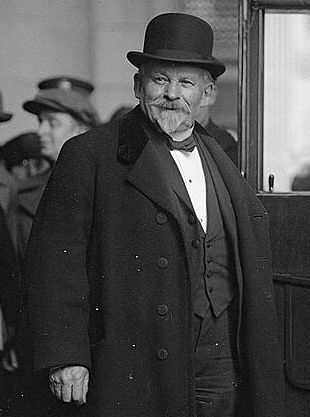
Émile Coué de la Châtaigneraie (February 26, 1857 – July 2, 1926) was a French psychologist and pharmacist who introduced a popular method of psychotherapy and self-improvement based on optimistic autosuggestion.
“Autosuggestion is an instrument that we possess at birth, and in this instrument, or rather in this force, resides a marvellous and incalculable power…” Émile Coué
SOME FACTS OF MONSIEUR COUE’S LIFE
Émile Coué (born in Troyes, France, 26 February 1857 of old noble Breton stock; died 2 July 1926 in Nancy, France) was a French psychologist and pharmacist who introduced a method of psychotherapy, healing, and self-improvement, based on autosuggestion or self-hypnosis. He has been called the Father of Applied Conditioning. He is remembered for his formula for curing by optimistic autosuggestion. His teaching achieved a vogue in England and the United States in the 1920s.
Most of us are familiar with the quote by Émile Coué, “Every day, in every way, I am getting better and better.”
Few people are aware that he was also a pharmacist and a pioneer in hypnosis. He believed in “autosuggestion” (self-hypnosis). He noticed that remedies given with positive autosuggestion worked better than the remedies alone. He also was known to state that each person had the solution to their own problem: “You have in yourself the instrument of your cure.”
Coué often worked with patients to build what we would call today, their self-image or self-esteem. He did this by utilizing his “Law of Concentrated Attention.” The Law of Concentrated Attention states that whenever attention is concentrated on an idea over and over again, it spontaneously tends to realize itself. That’s where “every day…” came in.
Coué learned hypnosis from Ambroise-Auguste Liébault, the founder of Nancy School, and in 1913 Coué founded the Lorraine Society of Applied Psychology. His book Self-mastery through conscious autosuggestion caused a sensation on its publication in England (1920) and in the United States (1922).
Coué introduced a new method, the self-starting of conscious autosuggestion. He modified the theory of Abbé Faria by proposing that for autosuggestion to flow from the mind, one has to feed it first. By repeating words or images as self-suggestion to the subconscious mind, one can condition the mind, and then the conditioned mind will produce an autogenic command when required.
His familiar mantra, “Every day, in every way, I am getting better and better” (Tous les jours à tous points de vue je vais de mieux en mieux), is sometimes known as Couéism, or the Coué method. The method depends in part on routine repetition of the formula.
Purchase this Book with MP3 Audio CD to Learn More about Émile Coué.



Reviews
There are no reviews yet.